
A handful of trading psychology habits, checking your size before the trade, walking away after two losses, cutting screen time after a win streak, are what actually keep your account alive. Most blown accounts, prop firm challenges included, do not fail because the strategy was bad. They fail because a trader moved size after a loss, held a loser past the stop, or clicked into a revenge trade on the next candle. The chart never pulls the trigger. The person staring at it does, and that decision gets made in half a second, usually right after a string of red trades or one big green one.
Table of Contents
Catching Revenge Trades Before They Start
Revenge trading shows up after two or three straight losses in the same session, not after one. The trader who just got stopped out twice starts hunting for the next setup to "get it back," and that hunt usually ends in a worse entry than the first two combined.
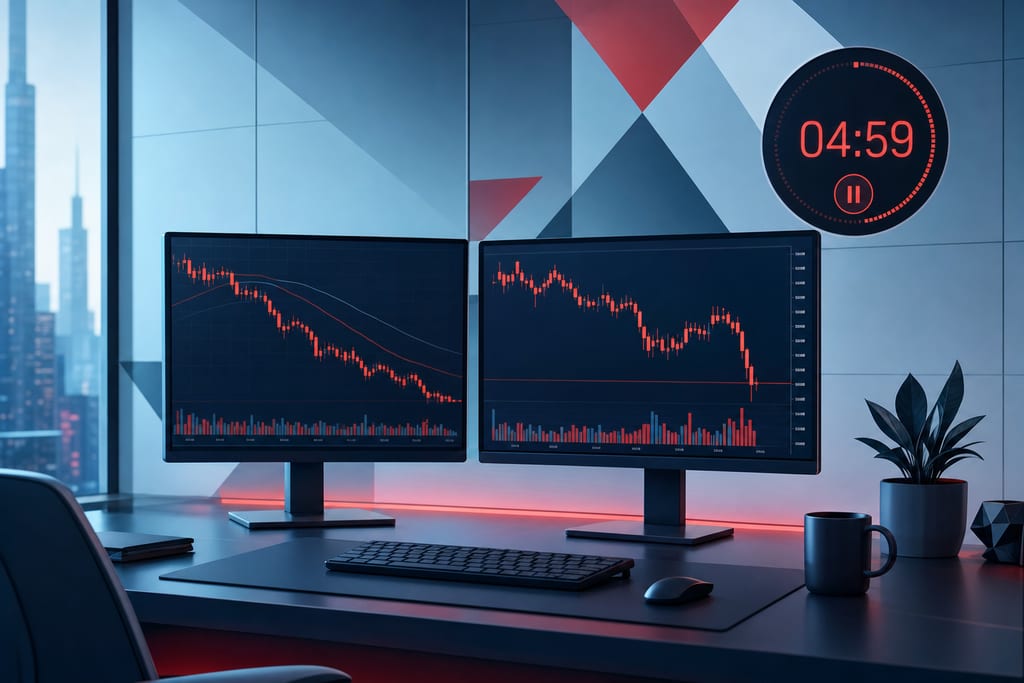
A hard rule breaks that loop better than willpower does. Stepping away from the screen for 15 minutes after a loss, no exceptions, forces the emotional spike to fade before the next click happens.
Traders who sort trades by time of day often find the pattern laid out plainly in their own numbers.
- Average loss size on the first trade of a losing streak
- Average loss size on the trade that follows a prior loss
- Win rate in the 30 minutes after a losing trade versus the session average
- Number of trades taken within 10 minutes of a stop-out
Watching that gap once is usually enough to make the 15-minute rule stick. One short video below walks through five rules built around exactly this kind of moment.
Sizing Positions By Rule Not By Feeling
Fixed-percentage risk per trade is the single best defense against sizing up after a hot streak. If the rule says risk 1% of the account on every trade, a four-win streak does not change that number, no matter how good the last trade felt.
Prop firm traders carry extra weight here, because one oversized trade can trip a daily loss limit and end a challenge that was otherwise on pace to pass. A trader sizing by feel has no floor stopping that from happening on the worst possible day.
Writing the max position size down before the session starts, on a sticky note or the top line of a rule sheet, keeps the number visible instead of negotiable in the moment.
- Set max contracts or shares per trade before the first entry
- Write the number somewhere you will see it mid-session
- Check size against the sheet before every order, not after
- Flag any trade that broke the rule in the post-session review
Reviewing Real Numbers Instead of Gut Feel
Memory favors big wins and drops small losses, which skews how a trader rates their own session. A trader who remembers "a good day" might be looking back at a day with a 38% win rate and one lucky runner covering five losers.
Checking win rate, drawdown, and P&L by symbol after each session catches that drift before it compounds into a bad week. This is a trading psychology habit worth treating as non-negotiable, the same way the sizing rule is.
- Win rate by session, not just by week
- Drawdown compared to the prior five sessions
- P&L broken out by symbol or instrument
- Trade count against the stated max for the day
Pulling those four numbers out of a broker statement by hand can eat an hour. MyTraderScore turns a broker CSV into a dashboard with those exact metrics plus an AI discipline report, so the review takes minutes instead.
Pick One Rule and Use It Tomorrow
Choose one habit, the 15-minute walk-away, the fixed-percentage size, or the post-session numbers check, and run it on your very next session. Trying all three at once usually means none of them stick past day three. A trader who nails the walk-away rule for two straight weeks has built more protection than one who half-follows all three for two days. Small, repeated checks beat a big overhaul that burns out by Friday. Protecting an account is not a setting you turn on once, it is a habit you run every session, and running a CSV through MyTraderScore after that session is the fastest way to confirm the habit actually held.
Stop losing trades and start making more money.
Start freeProtecting Your Trading Account Questions
Can trading psychology habits really work if I trade a fast-moving market like crypto or futures scalping?
Yes, but the habit has to fit the speed of the market. A 15-minute walk-away still works for a scalper, it just means 15 minutes off that symbol, not off trading entirely. Fixed-percentage sizing matters even more in fast markets, since a scalper can stack five oversized trades before a swing trader places one.
How long does it take before a new psychology habit actually changes my results?
Most traders see a measurable shift in two to three weeks of consistent use. That lines up with running one rule daily rather than switching rules mid-week. The change shows up first in smaller max-loss days, then later in a smoother equity curve, so look at drawdown before expecting win rate to jump.
What if I already journal my trades but still make the same emotional mistakes?
A journal records what happened, it does not stop the next bad trade from happening. The gap is usually between writing the entry down and seeing the pattern it belongs to, like three revenge trades over three separate weeks that never get connected because they live on separate journal pages. Pulling that pattern into one view, instead of flipping through past entries, is what closes it.